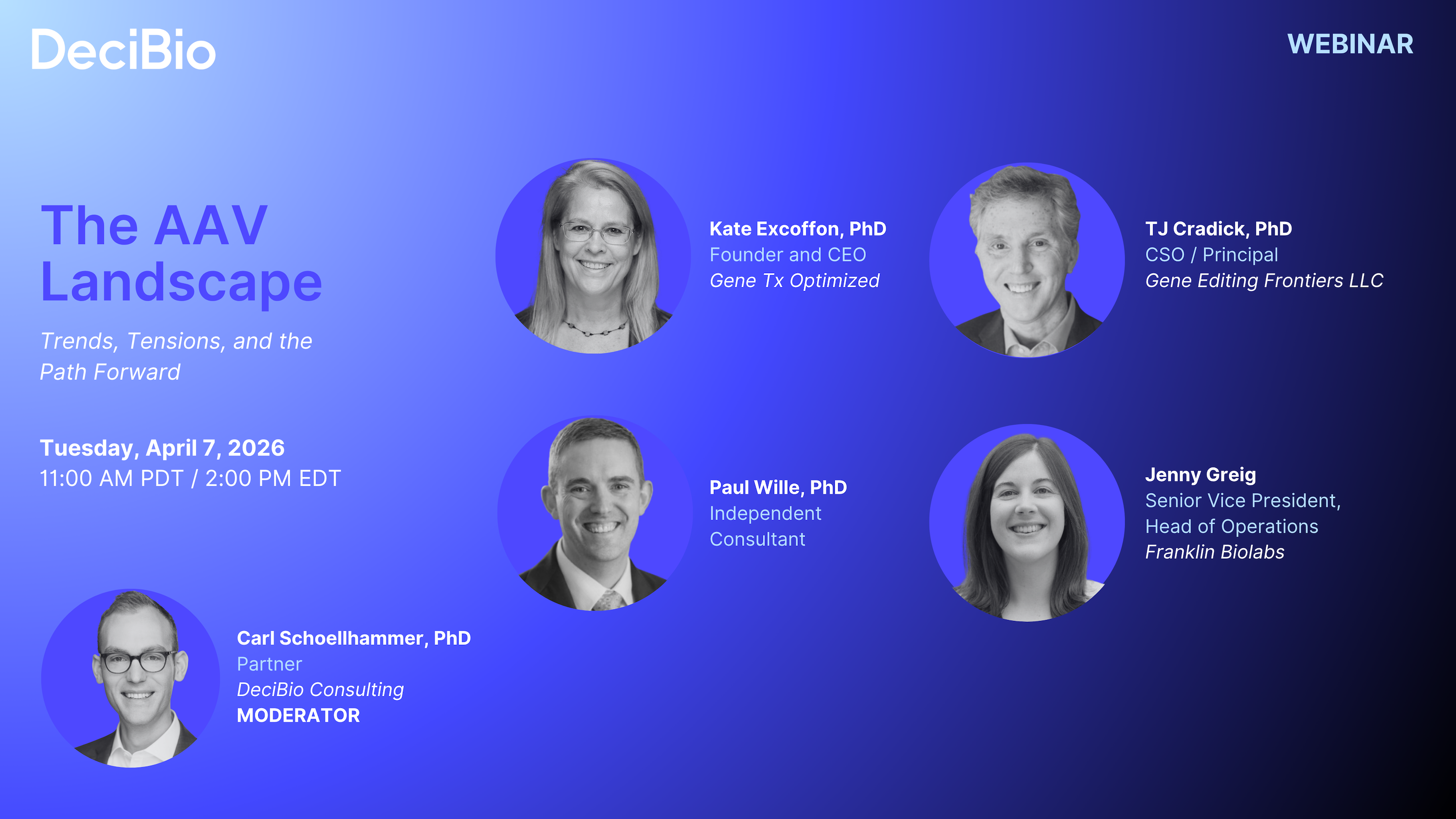
This webinar was recorded on Tuesday, April 7, 2026.
Complete the form below to view the full webinar recording.
Key Insights from the AAV Landscape Webinar
The AAV gene therapy field is currently in a "period of reckoning." While the promise of one-shot cures remains the primary driver, the industry is transitioning from a "brute force" manufacturing era to a more mature, data-driven approach. Our recent webinar brought together a panel of pioneers to discuss how the field is overcoming immunogenicity hurdles, optimizing manufacturing, and recalibrating for commercial viability.
The State of the Field: A Period of Maturation
Despite recent headlines regarding clinical setbacks and a tightening investment landscape, the fundamental "scale thesis" for AAV remains strong. With six FDA-approved AAV therapies and over 2,000 clinical trials underway, the field is benefiting from decades of accumulated clinical data. Panelists noted that while safety concerns and mortalities are tragic, the overall mortality rate remains extremely low (below 0.1%) compared to traditional treatments like hematopoietic stem cell transplants.
Overcoming the "Math Problem" of Delivery
A central theme was the shift toward "AAV + X"—combining viral vectors with targeted LNPs or utilizing dual-vector systems to overcome payload constraints. However, experts cautioned that dual-vector strategies, while mathematically intriguing, face significant biological hurdles in systemic administration. The consensus leaned toward local administration, such as subretinal or CNS delivery, as the most viable path to reduce dose, limit immunogenicity, and improve efficacy.
From Brute Force to Design of Experiments (DOE)
Manufacturing was identified as a historical bottleneck that is now seeing significant optimization. The industry is moving away from simply "getting enough out" toward sophisticated Design of Experiments (DOE) and improved analytics. Panelists predicted that these optimizations could lead to a 100x improvement in yield, potentially dropping the cost of manufacturing by 5 to 10 times by 2030. This cost reduction is essential for expanding AAV from ultra-rare "N-of-1" indications into more common diseases like age-related macular degeneration.
The Regulatory and Investment Horizon
As the field matures, regulatory bodies like the FDA are providing more clarity on platform designations and late-phase CMC changes. For biotechs seeking funding, the focus has shifted to de-risking: demonstrating robust manufacturing, utilizing computational models for immunogenicity, and ensuring consistent data to appease a more cautious investment community.
Note on Ecosystem Collaboration: During this session, Kate highlighted the Orphan Therapeutics Accelerator and its partnership with the American Society of Gene & Cell Therapy (ASGCT). These initiatives aim to bridge the "funding gap" for rare disease assets by creating a centralized marketplace for investors and developers to advance promising therapies that might otherwise lack a path to the clinic.
Speakers:
- TJ Cradick, PhD, CSO / Principal, Gene Editing Frontiers LLC
- Kate Excoffon, PhD, Founder and CEO, Gene Tx Optimized
- Jenny Greig, Senior Vice President, Head of Operations, Franklin Biolabs
- Paul Wille, PhD, Independent Consultant
Moderator:
- Carl Schoellhammer, PhD, Partner, DeciBio Consulting
Check out our full webinar below to hear the full insights.
Webinar Recording:

.png)
.png)